|
What is a Cable Drag Chain? Functions and Applications Explained
|
|
In modern industrial automation, robotics, and heavy machinery, ensuring the continuous and safe supply of energy, signals, and fluids is paramount. High-speed moving machine components place constant stress on delicate utility lines. This is where the cable drag chain plays a vital role. |
|
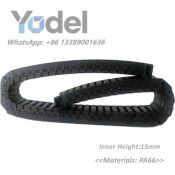
Also commonly referred to as a cable chain drag, dynamic cable carrier, or energy chain, this engineered mechanical component is designed to guide, support, and protect flexible cables and hoses connected to moving automated machinery. Below is an in-depth look at the primary functions and common application scenarios of these essential protective devices.
|
|
Key Functions of a Cable Drag Chain
|
|
A cable drag chain consists of individual links connected together to form a flexible conduit that bends along a defined radius while maintaining structural rigidity in other directions. Its core functions include:
|
|
Cable and Hose Protection: The primary function of a cable chain drag is to shield sensitive electrical cables, pneumatic hoses, and hydraulic lines from mechanical wear, abrasion, impact, tension, and chemical exposure during continuous motion.
|
|
Preventing Entanglement and Stress: Without a guide system, loose cables can easily become tangled, caught on adjacent components, or subjected to excessive bending and twisting. Drag chains keep cables organized in designated channels, maintaining minimum bend radii to prevent internal conductor fatigue and premature failure.
|
|
Extending Service Life: By reducing mechanical stress and preventing sharp bends, these chains significantly prolong the lifespan of high-flex cables and fluid hoses, minimizing expensive machine downtime and maintenance costs.
|
|
Safety Enhancement: Enclosing power lines and fluid tubes within a rigid structure creates a safer working environment, protecting personnel from accidental contact with high-voltage lines or high-pressure fluid leaks.
|
|
Primary Application Scenarios
|
|
Due to their versatility, durability, and reliability, cable drag chain systems are deployed across a vast range of industrial sectors:
|
|
1. CNC Machine Tools and Automation |
|
Computer Numerical Control (CNC) machinery—including routers, lathes, milling machines, and plasma cutters—operates at high speeds along multiple axes. A cable chain drag ensures smooth energy delivery to gantry mechanisms and cutting heads without risking cable snagging or wear against metal frame edges. |
|
2. Industrial Robotics and Material Handling |
|
Articulated arms, Cartesian robots, automated guided vehicles (AGVs), and automated storage and retrieval systems (ASRS) rely heavily on continuous multi-axis motion. Drag chains housed along linear rails provide seamless power and data transmission to end-effectors and moving carriages. |
|
3. Port Machinery and Heavy Equipment |
|
Large-scale equipment such as container cranes, gantry cranes, and mining excavators often operate over long travel distances under extreme weather conditions. Heavy-duty steel or reinforced polymer drag chains carry heavy hydraulic hoses and power cables reliably across hundreds of meters. |
|
4. Cleanroom and Semiconductor Manufacturing |
|
In cleanroom environments, specialized enclosed drag chains made from low-wear, low-dust materials are utilized to prevent particulate contamination while powering sensitive inspection and semiconductor fabrication tools.
|
|
Conclusion
|
|
Understanding the functions and applications of a cable drag chain highlights its critical role in modern engineering. By installing a high-quality cable chain drag, plant operators and machine builders can drastically improve equipment reliability, extend cable lifespan, and optimize industrial automation workflows. |